
I believe that project management is a force for good in the world.
It is my hope that by actively demonstrating how these individuals (people that the reader maybe already familiar with but not within the context described) succeeded only through the practice of good project management we will raise the whole project management profession to a new level of respect and admiration.
In addition this article hopes to establish project managers throughout history as being vital to the success of the greatest human endeavours, project management best practice is project management best practice after all, whether building pyramids in the desert, or rebuilding a war-ravaged continent and preventing mass starvation.
- The Egyptians (2750 BC – 1524 BC)
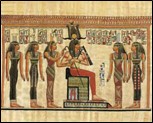
- Why were the Egyptians heroes?
The Egyptians have many achievements to their name. The invention of the first modern base 10 number system, including the use of fractions and algebraic equations. They created our first known recording of a courts and justice system, as well as making advances in medicine and astronomy. But their best known of achievements was, for over 1000 years, the designing, planning and constructing the pyramids. The largest of these, the Great Pyramid of Giza was to remain the largest man-made building in the world for thousands of years.
These monuments to the dead kings of Egypt were visited and have been visited by every conquering nation since their construction; Alexander the Great visited them, as did Caesar and Marc Antony, as well as invaders from later times.
- Why were the Egyptians heroes of project management?
The Egyptians were able to embark on the biggest project in history – the building of the pyramids. It took 2.3 million limestone blocks to build just the Great Pyramid at Giza. Stone had to be transported from up to 500 miles away, and although much of it was quarried across the river from the building site, a huge army of manpower was required to construct this monument (and the others built all along the length of the Nile). One suggestion is that the Great Pyramid required 14, 567 skilled personnel to build it over a period of 10 years.
To do this, the Egyptians had to have mastered project management, critical path analysis, stakeholder management (for Pharaoh Khufu), execution and control. What risks existed by building beside the Nile? What issues were there in managing thousands of men and huge quantities of raw materials? The Greeks thought they had used slave labour, but later modern day studies have revealed that the Egyptians employed skilled workers, and managed them accordingly.
- Gnaeus Julius Agricola ( 40 AD – 93 AD )
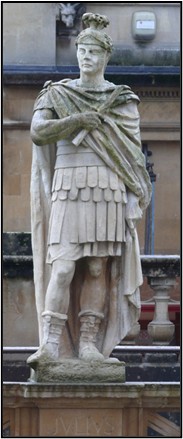
- Why was Agricola a hero?
We are lucky that Agricola’s daughter married the great roman Author Tacitus, and it is from Tacitus that we know most about this Roman Statesman and Military leader. Agricola conquered large areas of Britain, subjugated the tribes, installed Latin civilisation, whilst contending with indiscipline in the army and intrigue in Rome.
- Why was Agricola a hero of project management?
Agricola had problems familiar to anyone in project management. He had limited resources, fickle management, a demoralised workforce and constantly changing objectives. As an appointee of the Emperor Agricola had to navigate the machinations of his key stakeholder, the Emperor Domitian, simultaneously planning military campaigns whilst being careful never to usurp or appear to usurp the Emperor.
- Emperor Vespasian ( 9 AD – 79 AD )
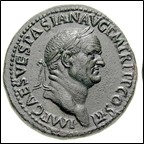
- Why was Vespasian a hero?
After a string of mad and despotic rulers had lost the trust of the people and its citizens the Roman Empire was in danger of splitting into civil war. Vitellius, Otho, Galba, Nero had all wasted their time as leader of Rome. Vespasian gave back to Rome what it needed – a strong administrator, and by association, a strong project manager.
- Why was Vespasian a hero of project management?
Vespasian’s project was the Roman Empire. He didn’t have the drama of Caesar or the melodrama of Marc Anthony, but he did take concrete steps in every direction to solidify and increase the prosperity of the Roman Empire. He was an excellent communications manager, directing operations in far off places, not only military operations but also directing the corn shipments to Rome. He managed competing stakeholders, treated risks to the empire by forming alliances with other states and commenced a huge building project in Rome. Vespasian was the archetypal Program Manager.
- General Bernard Montgomery ( 1887 – 1976 )
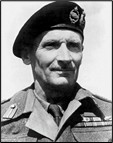
- Why was “Monty” a hero?
Bernard Montgomery or “Monty” for short was the most decorated British soldier of his time, becoming a Field Marshal after the World War II D-Day landings in Normandy. In Egypt in 1942 he prepared for and won the battle of El Alamein which was the first major battle won by the British during WWII, coming at a time when the British had been under attack for 2 years and their very survival was still at risk.
- Why was “Monty” a hero of project management?
In preparing for El Alamein “Monty” showed all the skills a Project Manager needs in a high risk and life threatening situation (the previous General had been captured by the Germans). The planning, execution, and control and monitoring exercise by “Monty” during this time shows him as a great task oriented project manager, with attention to detail, and a unique understanding of how to satisfy all stakeholders, from political leaders like Churchill (who were immensely difficult to deal with, always “meddling” ) to the warm-hearted support of the private soldiers on the ground.
- General George Catlett Marshall ( 1880 – 1959 )
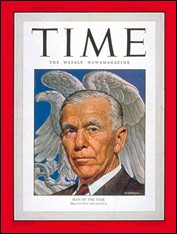
- Why was General Marshall a hero?
Although a General, George Marshall place in history is guaranteed by his “Marshall Plan” – a plan that revived a destroyed continent, ravaged by destruction, disease and starvation in the immediate post-war years. Marshall later received the Nobel Peace Prize for the plan in 1953 demonstrating its success, but by that time, the millions of Europeans whom had been raised out of poverty were already aware of its success.
- Why was General Marshall a hero of project management?
The “Marshall Plan” was a unique, one-off activity that has never been equalled before or since. With many Americans and Europeans baying for revenge and reparations to be paid, George Marshall successfully fought off those calls created and implemented a plan to such success that the prosperity of Europe was guaranteed for the next 50 years.
- Isambard Kingdom Brunel ( 1806 – 1859 )
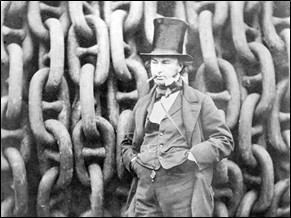
- Why was Isambard Kingdom Brunel a hero?
Isambard Kingdom Brunel or “IKB” “littered” the British countryside with outstanding feats of engineering in the 19th Century. Victorian Britain was the centre of the industrial revolution and IKB project managed, as well as designed, many of the greatest industrial triumphs of this era.
- Why was Isambard Kingdom Brunel a hero of project management?
How IKB’s risk mitigation strategies ensured the success of the Great Western Railway – running from London to Exeter. His project management skills ensured they were successful, even to the point of closing down unsuccessful operations before wasting any more money.
- Frank Crowe ( 1882 – 1946 )
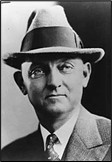
- Why was Frank Crowe a hero?
Although Frank Crowe was an engineer by trade, he project managed the building of the Hoover Dam in the United States of the depression hit 30’s. The dam had been conceived ever since the early 1920’s to provide power to the growing population in Southern California. The dam was given the go-ahead by Congress in 1929, and a contract finally awarded to 6 Companies construction, who’s superintendent was a well-respected engineer called Frank Crowe.
- Why was Frank Crowe a hero of project management?
Completing the dam, one of a kind in the world, using unproven and risky techniques, 2 years ahead of schedule and within budget. With competing stakeholders such as unions, politicians, landowners, Chinese migrants, company bosses and his own family, Frank was able to monitor and control activity across the whole project, so that the dam over 80 years later is seen as a modern wonder of the industrial world.
- Sir Paul McCartney ( 1942 – Present )

- Why is Paul McCartney a hero?
Sir Paul McCartney MBE is commonly acknowledged to be one of the greatest songwriters of the mid to late 20th Century. Apart from being the leading light in two major bands, The Beatles and Wings, he also had a successful solo career, and corroborated with numerous individual artists.
- Why is Paul McCartney a hero of project management?
It may be unusual to think of a recording album as a “project”, but it sincerely is, a one-off unique event in recording history. Paul McCartney, after the death of The Beatles’ manager, Brian Epstein, kept The Beatles together as a functioning unit (managing the team) and wrote, played and sang in what many people feel is the major rock album of the twentieth century, “Sergeant Pepper’s Lonely Hearts Club Band”. Not only that but Paul McCartney quite capable of closing down a project when it was no longer worth continuing with. Witness the “Let It Be” album which was closed down and abandoned until ‘re-discovered’ by Phil Spectre a couple of years later. The ability to separate unique activities (i.e. projects) into those worth doing and those that should be shut down is the mark of a great project manager.
- Richard Curtis ( 1956 – Present )

- Why is Richard Curtis a hero?
Known for the films Love Actually and Notting Hill, Richard had the budget for his first comedy TV Series Blackadder almost cancelled. As it was he lost more than 50% of his finance, lost his locations in North-Eastern England and lost key actors. From that base Richard managed to create Blackadder II, a hilarious hit sit-com based in Elizabethan England.
- Why is Richard Curtis a hero of project management?
The Iron Triangle governs many project managers’ lives. However the application of some thought, ingenuity or “blue-sky” thinking can change the game for ever. Faced with a reduction in budget of 50%, Richard reduced scope, losing renowned English character actors and replacing them with (cheaper) comedians. In addition the activities required to make a successful sitcom were revised, more jokes, more laughs, real audiences and a tighter time schedule to come in under budget. The focus and control displayed in execution undoubtedly contributed to the project’s major success (Blackadder II has regularly been voted one of the BBC’s top comedy series ever), and shows the project management skills of this formidable comedy writer.
George Lucas ( 1944 – Present )
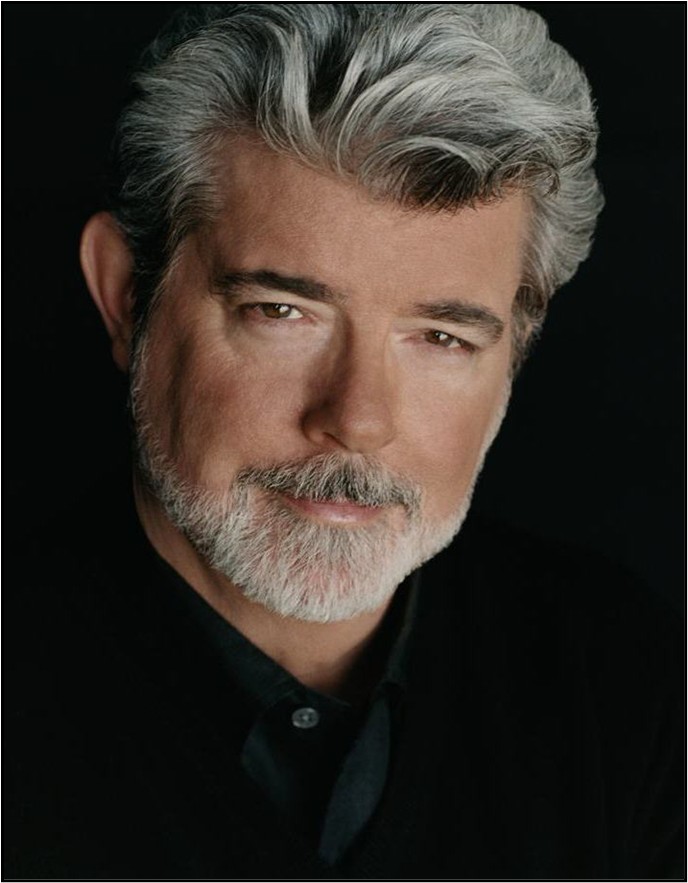
- Why is George Lucas a hero?
How George Lucas went from making small, low-budget art-house films to producing, writing and directing the biggest film of all-time, Star Wars, against the advice of all major studios and their financial backers. The story of Star Wars is the “story” of Star Wars, how meticulous planning and execution created a cinematic revolution.
- Why is George Lucas a hero of project management?
George Lucas was methodical and purposeful in creating the Star Wars franchise. His team building ability meant he could draw on the talents of many of those he had met, young, enthusiastic and very clever. He was also able to estimate and determine his costs for the Star Wars film, using detailed log sheets, and then controlling them in such a way to please the studio. Even his wooing of major stakeholders was done in such a way as to highlight that George Lucas mastery of Project Management is a guide for us all.
- John Wesley ( 1703 – 1791 )
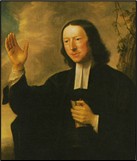
- Why was John Wesley a hero?
John Wesley founded the Methodist movement in the 1800’s in the face of strong and sustained opposition from the Church Anglican establishment. He created the first modern evangelical movement and had an impact on many millions of people’s lives. His advocacy of itinerant preachers radically changed how society viewed social issues.
- Why was John Wesley a hero of project management?
John Wesley founded churches throughout Great Britain and North America – in modern day parlance his team building abilities were second-to-none. His ability to acquire, develop and then manage these disparate teams, across 2 continents, before the days of wireless telegraph or the internet is astonishing. It was also Wesley’s definition of the scope of his work that helped the success of his project – although attracting opposition from the established Anglican church – he nevertheless felt bounded by its teaching, if not is practice, and always saw himself as falling within that boundary (he controlled and monitored his scope constantly – as evidenced by his many pamphlets, brochures and lectures he wrote).
- John Snow ( 1813 – 1858 )
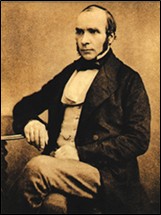
- Why was John Snow a hero?
In mid-19th Century Victoria Britain, little was known about modern concepts of cleanliness and hygiene. Water that was in fact foul and polluted was sometime considered as a “specialty” that would gather people for many miles around. John Snow set about systematically mapping the outbreak of cholera in London in 1854, and by his hard work introduced the modern concept of clean drinking water. His legacy has saved from millions upon millions of people from an early grave.
- Why was John Snow a hero of project management?
John Snow had to approach his problem systematically and methodically, with the tools we are now familiar with in project management. By demonstrating a care for detail, a planned and methodical approach, John Snow was able to capture the data he needed. By scoping his work to one specific area, by the use of reasoned questioning and inquiry, and by his determination and strength of character he was able to solve this greatest medical puzzle of his time, and bring about a revolution in the science of medical hygiene.
- Richard Rogers ( 1933 – Present )

- Why is Richard Rogers a hero?
The renowned architect, responsible for Silvercup Studios and the Jacob K. Javits Convention Centre both in Manhattan was once struggling with his career when the opportunity came up for the Pompidou Centre. With “with its exposed skeleton of brightly coloured tubes for mechanical systems” it transformed the city of Paris. Ironic then that it should be designed, partially, by an Englishman.
Against all media comment and with many fellow stakeholders to convince, along with fellow architects, Rogers produced an iconoclastic model and a modern landmark for Paris.
- Why is Richard Rogers a hero of project management?
Richard had to deal with many different groups of stakeholders, the planning process was fraught with difficulties, communications in his non-native tongue were difficult, cost identification was made harder because this type of building had never been attempted before. Managing a bilingual project team had its own challenges, as well as working out of Paris and London (where Richard was based), as well as overcoming Francophone aversion to anything “Anglo-Saxon”. To overcome these challenges and build an iconic French monument is why Richard Rogers is a Hero of Project Management.
This article has explored the timeless nature of project management by tracing its influence through some of history’s greatest achievements and individuals. From the construction of the Egyptian pyramids to the rebuilding of post-war Europe, from Roman generals to modern creators like George Lucas and Richard Curtis, each story illustrates how effective planning, leadership, and execution turns vision into reality.
It is a ‘quiet’ discipline that makes progress possible.
Perhaps it’s time for project managers to come out of the shadows?
 SquaringTheTriangle
Join the conversation — how do you Square the Triangle?